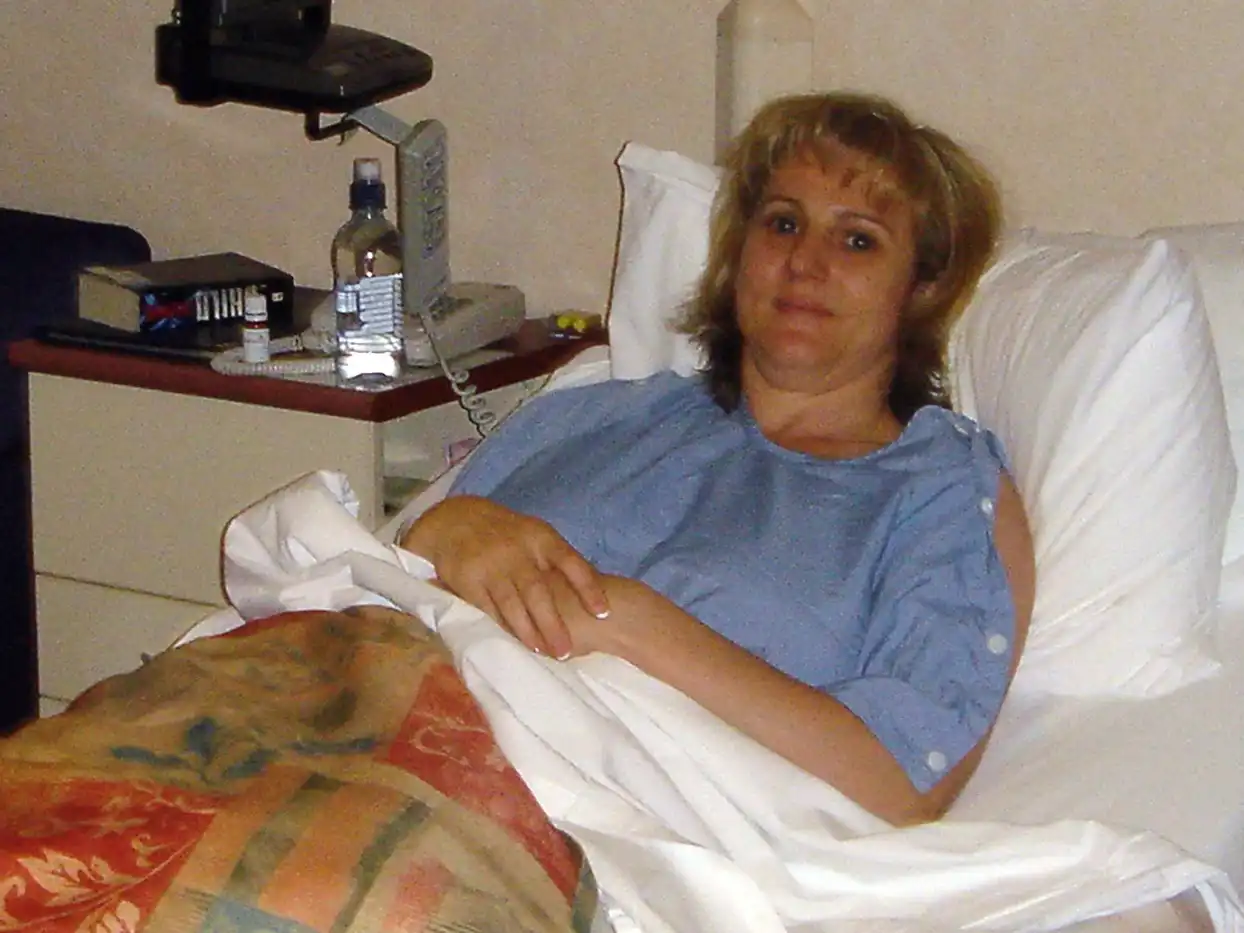
Charlotte was diagnosed with breast cancer in 2004. Although her cancer was treated successfully at the time, in 2021 she was diagnosed with stage 4 breast cancer, advanced cancer that has spread from the breast to other parts of the body. She is responding well to treatment but knows her cancer cannot be cured.
“When we got the news about Charlotte’s diagnosis, it felt like the ground fell away beneath us. You think about the family, the grandchildren, all the things you still want to share together,” said her partner Andrew Barnes, entrepreneur and philanthropist.
Charlotte and Andrew were introduced to Jean Abraham, Professor of Precision Breast Cancer Medicine at the University and an Honorary Consultant in Medical Oncology at Addenbrooke’s Hospital. Professor Abraham is a Fellow, College Lecturer, and Director of Studies in Pathology and the Biology of Disease at St John’s.
She leads Cambridge’s Precision Breast Cancer Institute, which uses advanced technologies and artificial intelligence to create highly individualised approaches to breast cancer treatment. It involves analysing a patient’s genomic, molecular, and clinical data collectively, aiming to identify the treatment and clinical management plan most effective for each patient.
Andrew and Charlotte are providing the £10 million donation via the Barnes Lockhart September Giving Trust.
Professor Abraham said: “I’ve met and treated thousands of women in Charlotte’s position throughout my career. As a scientist and clinician, I always want to do more, to be able to say to people diagnosed with breast cancer, ‘we’re able to help you, you don’t need to be afraid of your diagnosis’.
“This generous gift gives us the opportunity to bring together world-leading scientists, clinicians and patients under one roof, where discoveries made in the laboratory can rapidly become treatments that benefit people with breast cancer.
“I’m delighted and grateful to Andrew and Charlotte for helping fund our institute. Thanks to their generosity, we have the opportunity to make a real difference to all breast cancer sufferers, their children and future generations.”
She added: “We are entering a golden age of cancer research. Technologies such as genomic sequencing and artificial intelligence are transforming how we understand the disease, allowing us to develop more precise treatments tailored to each individual patient. Ultimately, our ambition is not only to improve survival, but to prevent breast cancer wherever possible.”
Every patient treated through the programme will be offered genetic testing, enabling clinicians to match individuals with the treatments and clinical trials most likely to benefit them.
Although based in Cambridge, Professor Abraham said the institute’s ambitions extend far beyond the city.
“The aim is to have a global impact on improving breast cancer survival and outcomes,” she said. “We know we can continue improving survival rates and change the landscape for future generations.”
Andrew, who graduated from the University of Cambridge before pursuing a career in investment banking and business, said he wanted to support research where it could have the greatest impact.
“I felt that if we want to cure cancer, we want to back a winner,” he said. “From our perspective, the logical place was to back what's being done in Cambridge.”
Charlotte is living in what she calls her ‘good health window’ and has advocated for better access to medications since her 2021 metastatic diagnosis.
She said: “It’s the sort of diagnosis that stops time, and for me, that set about a full reset on how I spend my time and energy. I am focused on advocating to extend to others the advantages, information, and advice that have helped me. I am grateful for the gift of time that medication has given me, and I know that the institute will deliver extraordinary outcomes for people diagnosed with breast cancer in the future.”
Breast cancer is the second most common cancer in the UK, with around 59,000 women diagnosed each year. Survival rates have more than doubled over the past 50 years, and researchers hope the new institute wil lhelp accelerate that progress through precision medicine, earlier diagnosis and prevention.

As New Zealand residents, Andrew and Charlotte strongly support Cambridge Cancer Research Hospital’s ambition that the breakthroughs made possible there will transform cancer care and bring hope to millions of people across the world.
“With one in two of us expected to be diagnosed with cancer during our lifetime, it’s obvious that this is a global problem,” said Andrew. “Whether it’s finding ways to diagnose cancers faster or developing kinder, more targeted treatments, I’m confident that whatever happens in Cambridge will have an impact on how we treat cancer back home in New Zealand, or indeed anywhere in the world.”
Charlotte says their philanthropic support is giving her optimism at a difficult time.
“I’m responding well to treatment, so I still have hope, and this hope exists because of research. Without research, I wouldn’t still be here today. It’s thanks to brilliant researchers like Jean that there’s been such a transformation in how we detect, treat, prevent – and hopefully one day– cure cancer. That’s why Andrew and I are proud to support the Cambridge Cancer Research Hospital.”

The Charlotte Lockhart Precision Breast Cancer Institute will form part of the new Cambridge Cancer Research Hospital. Construction of the new Hospital is due to complete in 2030.