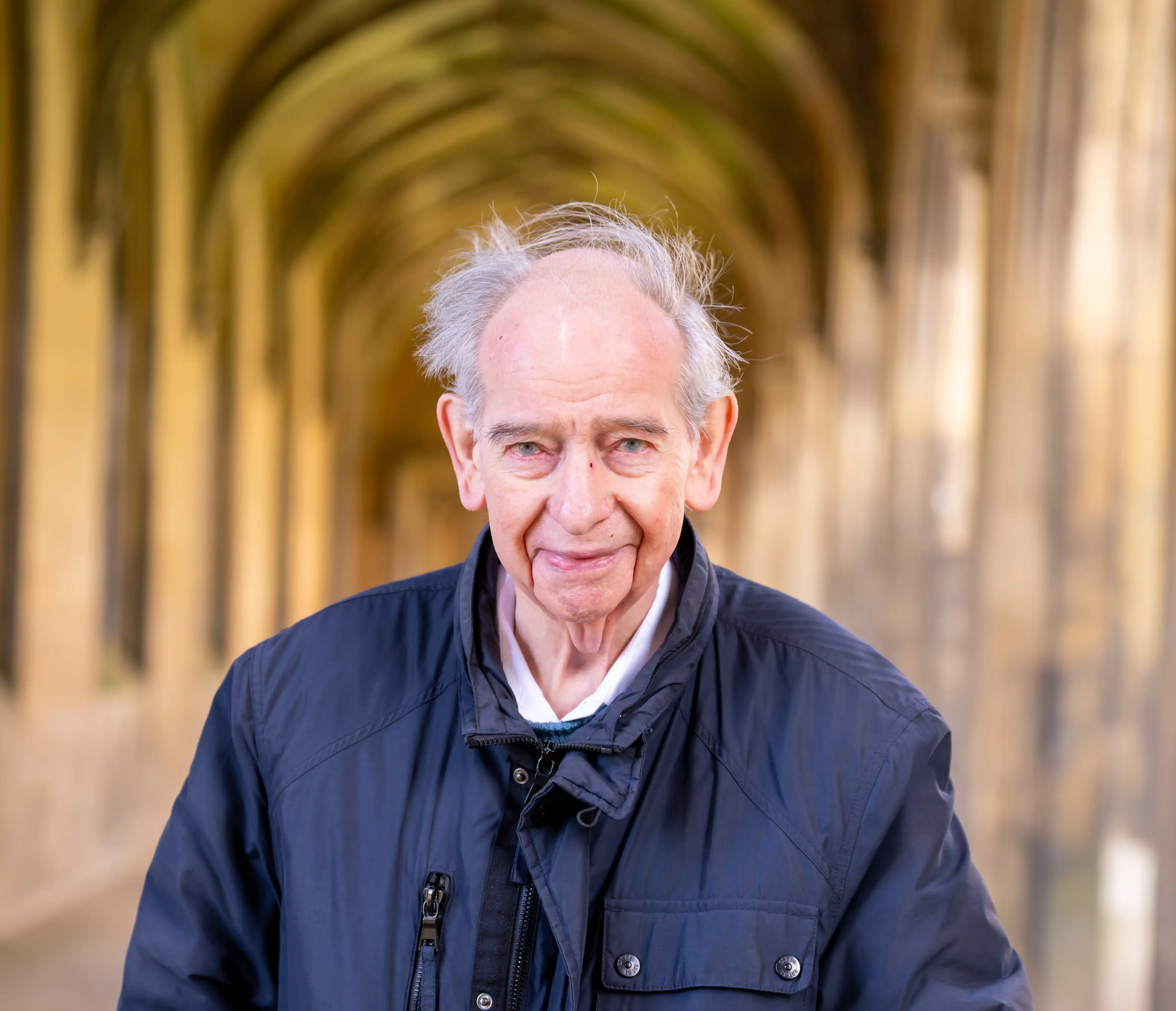
Tributes have been paid to a distinguished St John’s researcher renowned for his life’s work in African history.
John Iliffe MA PhD LittD, Emeritus Professor of African History, wrote many notable books on Africa and specialised in Tanzania, where he taught at the University of Dar es Salaam for several years.
He became a Fellow of St John’s College, Cambridge, in 1971, when he was appointed University Assistant Director of Research in History. From 1980-90 he was Reader in African History and was Professor of African History from 1990 until his retirement in 2006. He was working on his latest research until recently and died on Thursday 20 August.
“African history owes John a staggering debt in his sheer curiosity, his extraordinary appetite for gruelling hard work, his courage in publishing in so many areas of others’ expertise, perhaps above all his intellectual capacity to lodge intimate human anxieties, hopes, obligations, determination and expectation in long spans of continental-wide change and continuity, said Professor John Lonsdale, Emeritus Professor of Modern African History and Fellow of Trinity College, Cambridge.
“To those who had the good fortune to know him he will be sorely missed. And future scholarly generations who will never know him personally, will, so long as reading continues, benefit from engaging with his thoughts, always expressed in such clear and uncomplicated prose. His combination of query and encouragement was always so positive.”
Professor Iliffe was educated at Framlingham College, Suffolk, and Peterhouse, Cambridge. After completing his PhD, he taught at the University of Dar es Salaam from 1965-1971. Arriving soon after the unification of Zanzibar and Tanganyika as the independent republic of Tanzania, Professor Iliffe was a central figure of Dar es Salaam’s ‘School of African history’, which focused on African agency.
“African history owes John a staggering debt in his sheer curiosity”
A Fellow of the British Academy from 1989 to 2006, his seminal books include A Modern History of Tanganyika (1979), which he researched while teaching in the East African country, the comprehensive Africans: The History of a Continent (first ed 1995), and Honour in African History (2005).
In 1988 the African Studies Association awarded Professor Iliffe the Herskovits Prize – now known as the ASA Book Prize – for The African Poor: A History (1987), which gained him recognition in US academia.
“Nobody has done more than John Iliffe to deepen and widen our understanding of African history,” said Professor Lonsdale. “His range of interests, his mastery of evidence from such an exhausting array of archival sources and unpublished dissertations, not only in English but also in French and German, were truly astonishing, thanks to the legendary length of the hours he spent at work, with pencil and note-cards, not with smartphone – and writing not on keyboard but with typewriter.
“On top of astonishment, however, it is the humanity of John’s insights that strike deepest.”
Professor Malcolm Schofield, Emeritus Professor of Ancient Philosophy, and a Fellow at St John’s, described Professor Iliffe as ‘a historian of great distinction’ who spent much time and effort in helping his African research students complete successful PhD dissertations.
“John was an unfailingly friendly and courteous presence among us, often with a twinkle in the eye”
Professor Iliffe taught generations of St John’s students as a Lecturer and Supervisor in History until 2015. Professor Simon Szreter, Professor of History and Public Policy and a Fellow of St John’s College, learned under him as an undergraduate.
“John’s wonderfully thorough and eye-opening lectures and classes enabled a complete novice in African history to grapple enjoyably with the primary sources of French and English missionaries, colonial authorities and translated Baganda memoirs,” said Professor Szreter.
Professor Lonsdale said Professor Iliffe’s Modern History of Tanganyika ‘is still the best national history of any new African state’.
“Nobody else has tackled such a humane variety of historical topics: African famine, African capitalism, the many different senses of African honour, political biography, the birth of the East African medical profession, the suffering and endurance of the African poor over the centuries, the AIDS epidemic, culminating in his absolutely essential Africans, The History of a Continent – from the origins of humankind to the present day – and of which the third edition appeared from the Cambridge University Press in 2017.
“Despite John’s Stakhanovite work ethic he always had time for others interested in Africa (and for one cricket match per annum). I myself have benefited enormously from his attentive criticism, most recently in June of this year.”
Professor Iliffe was updating a fourth edition of his history of the African continent and could often be found working in the College Library. Professor Schofield said: “John was a very private person, but in St John’s an unfailingly friendly and courteous presence among us, often with a twinkle in the eye.
“His curiosity always shone through, and – for want of a better word – his humanity”
“In his later years one might spot his mobility scooter parked outside the Library, where he still spent many hours reading and working.”
Professor Schofield added: “It was not all work and no play. John had been a member of the Marylebone Cricket Club from his early teens, arranged for him, he once told me, by his local vicar, who he thought had spotted that the game would always be the main object of his devotion.”
Tanya Kirk, Librarian and Fellow of St John’s, said he would be much missed by Library staff. “Professor Iliffe was one of our most dedicated and appreciative visitors, spending time researching in the Working Library virtually every day.
“He recently mentioned that he expected to be visiting less as he was finishing his current project after many years’ work on it – I hope he was able to enjoy the satisfaction of completion and a job well done.”
Felicitas Becker, Professor of African History at Ghent University, Belgium, also paid tribute to Professor Iliffe, who supervised her as a PhD student at St John’s between 1998 and 2002 – recalling his ‘instinctive solidarity with underdogs’.
“Working at a time when a lot of history writing depends on elaborate theoretical scaffolding, John could get away with writing in an empiricist tradition because he was so very good at gathering and structuring factual information, but also because he chose the concepts he did use carefully and applied them consistently and skilfully,” she said.
“His curiosity always shone through, and – for want of a better word, and although he might well scoff at this – his humanity.”
Dr Kenneth S Ombongi, Associate Dean, Research and Postgraduate Studies at the University of Nairobi, remembered Professor Iliffe as an understanding, kind and generous teacher at Cambridge. “His scholarship taught generations how to think about Africa. His humanity taught those of us fortunate enough to know him something else: that the greatness of a scholar is measured not only by the books he leaves behind, but also by the lives he quietly touches,” he said.
“I remain one of those lives. May his memory continue to illuminate African history, and the human history behind it.”