Expensive willow cricket bats should be replaced by cheap and sustainable bamboo, according to a Fellow at St John’s College who has developed a cutting-edge new design.
Dr Darshil Shah, Associate Professor in Materials Science and Design, and Co-Lead at the Cambridge’s Centre for Natural Material Innovation, is promoting bamboo as the ingredient for a new generation of cheaper cricket bat that would allow youngsters from all backgrounds to enjoy the sport, from the UK to India.
“We’re trying to tackle a social problem through an engineering solution,” said Dr Shah, who is a former member of Thailand’s under-19 national cricket team.
Bamboo is also more efficient in transferring energy from batsman to ball than those made from traditional willow – which Dr Shah called ‘a batsman’s dream’.
Now he has been awarded ‘proof-of-concept’ funding from UK Research and Innovation (UKRI) for his CamBoom start-up to champion inclusion in cricket with his engineered bamboo bats. It is one of 48 projects to share £9 million of UKRI funding to harness the potential of world-leading UK research to improve lives.
Currently, a willow bat can cost £130, with top-of-the-range models hitting £1,000. A bamboo bat would cost much less.
Dr Shah, a College Lecturer in Architecture and Design and Director of Studies for Design at St John’s, has compared performance of prototype laminated bamboo cricket bats – the first of their kind – with that of typical willow bats.
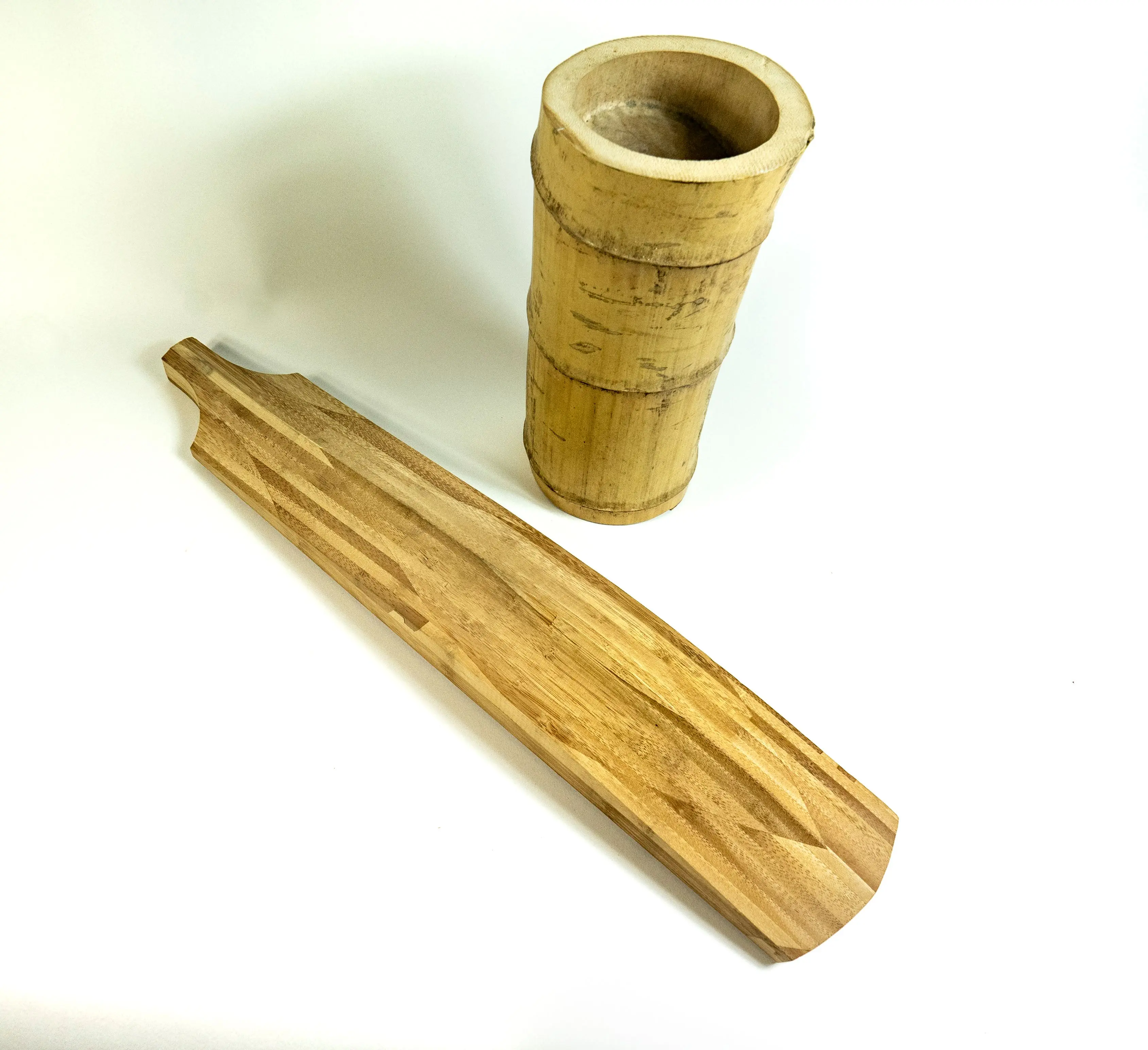
Published in The Journal of Sports Engineering and Technology in 2021, the prototype shows a bamboo bat is significantly stronger than willow, even as a thinner product.
Good-quality willow takes up to 15 years to mature to the point where the wood can be used to make cricket bats. Even then, bat makers often have to throw away a large quantity of wood.
By contrast, Moso and Guadua, the two most suitable types of structural bamboo, grow abundantly in China, across Southeast Asia and South America. They mature twice as fast as willow and, because the cell structure in the laminated material is more regular, less raw material is wasted during manufacture.
Dr Shah believes high performance, low-cost production and increased sustainability could make bamboo cricket bats a viable and ethical alternative to willow.
With more than 200 million people worldwide playing cricket regularly, the majority in low and middle-income countries, he believes there is a strong consumer demand for low-cost recreational cricket bats.
One issue for the professional sport is that Marylebone Cricket Club – the spiritual home of cricket which regulates the materials used to make bats – has a law stating bats must be made ‘solely of wood’.
“But we think playing with a bamboo bat would be within the spirit of the game because it’s a plant-based material and cane, a type of grass, is already used in the handle,” added Dr Shah.