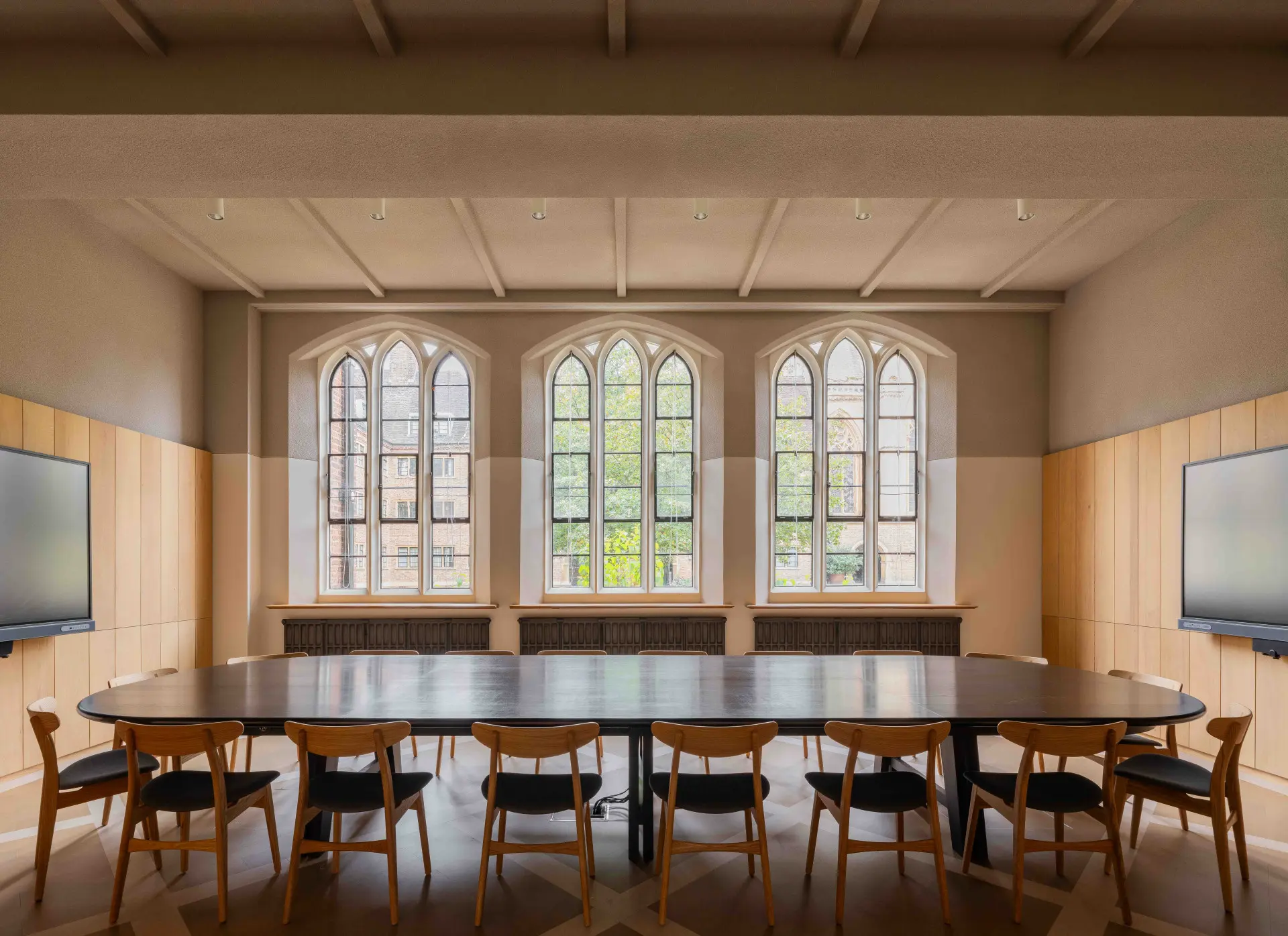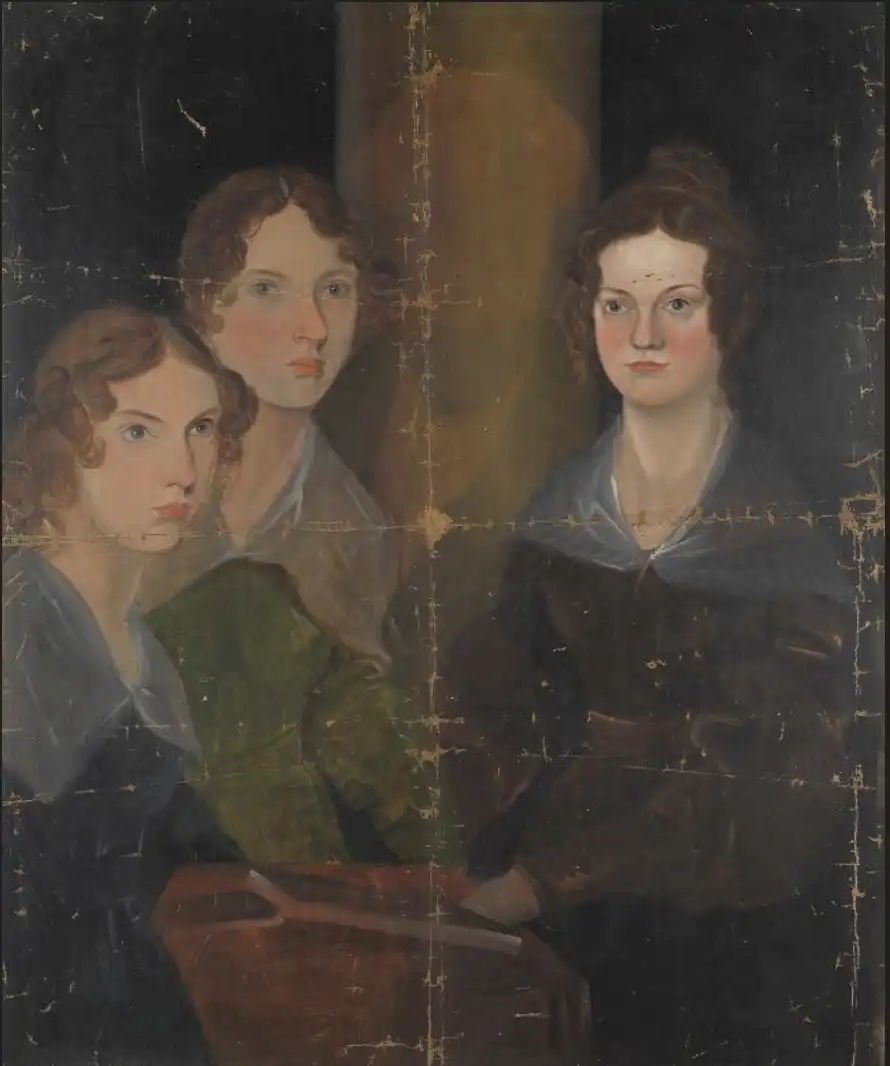
Long before Heathcliff haunted the moors or Jane Eyre found her husband’s first wife in the attic, a young Irishman named Patrick Brunty came up to St John's.
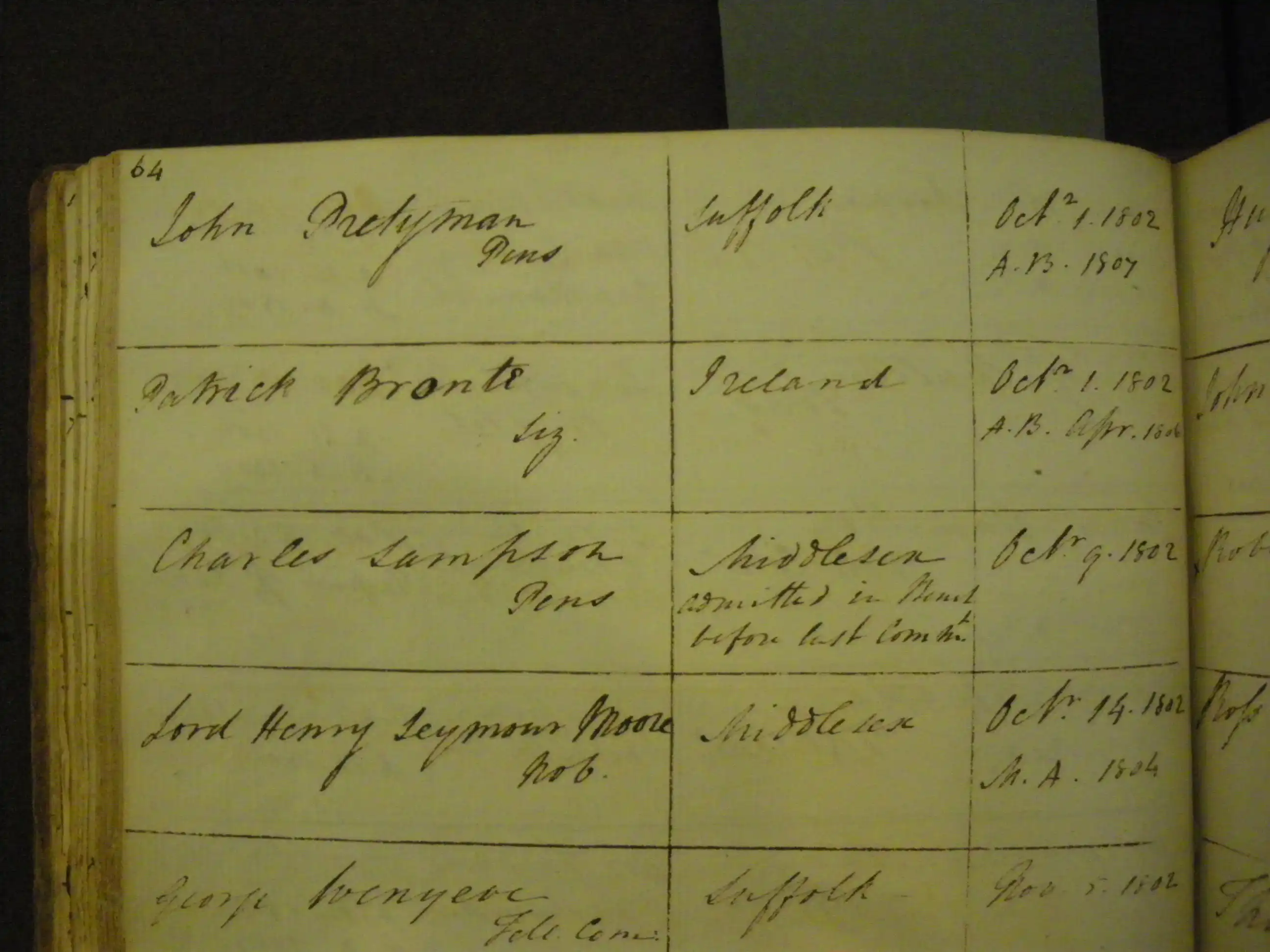
Born on 17 March 1777 in County Down, Patrick was the eldest child in a poor farming family and worked as an apprentice before local clergyman took an interest in his education. With his encouragement, Patrick won a scholarship to St John’s and came up in 1802 as a sizar, known in modern terms as a bursary student.
Traditionally, sizars were given College jobs and duties in return for reduced costs but by the early 19th century the name mainly signalled that the student’s education was being subsidised and that he was at Cambridge on merit rather than through family money. Patrick studied divinity, ancient history and modern history, mixed with evangelical contemporaries, worked hard and won University prizes.
His name was originally recorded at St John’s as Patrick Brunty – historians have also found it in other contexts written as Prunty and Bruntee. During his undergraduate years in Cambridge he shifted the spelling to Bronte, and by 1811 he was consistently using the diacritic form Brontë – the transition is tracked in the College registers of students found in the Archives.
%20edited%20(1).webp)
Multiple theories exist about why Patrick changed his name again during his time in Cambridge, but two dominate. The first and most common is that Patrick adopted‘ Bronte’ in tribute to Admiral Horatio Nelson who, in 1799, at the height of his national hero status, was granted the Sicilian title Duke of Bronté.
Another theory is that as a scholar he would have known that the Greek word brontē means “thunder” and he may have preferred the dynamism of it to the more prosaic Brunty.
Dr Lynsey Darby, Archivist at St John’s, said: “For an ambitious young Irishman entering the English clerical profession, refinement of a rural surname was not unusual and it could reflect the fluidity with which names were sometimes adapted in an age of social mobility.”
Patrick graduated in 1806 with a Bachelor of Arts degree and was ordained soon afterwards. He had a public profile of his own and wrote volumes of verse – Winter-Evening Thoughts (1810), Cottage Poems (1811) and The Rural Minstrel (1813), which included “Kirkstall Abbey,” written after visits to the Yorkshire ruins – followed by The Cottage in the Wood (1815). In 1818 he published The Maid of Killarney, an evangelical narrative set in Ireland that addressed civil obedience and Catholic emancipation while depicting rural poverty and unrest.
He organised petitions to restrict capital punishment and to abolish slavery, and contributed letters to the Leeds Intelligencer and the Leeds Mercury. His writing was praised for its conviction, and he was known for engaging in, and relishing, public debate.
In 1812, Patrick Brontë married Maria Branwell. Eight years later, in 1820, he accepted the post of perpetual curate at Haworth in Yorkshire, and the family moved into the parsonage. The couple had six children: Maria, Elizabeth, Charlotte, Branwell, Emily and Anne.
Maria Branwell died in 1821, probably of cancer, leaving Patrick with six children under the age of eight. In 1825, the two eldest daughters, Maria and Elizabeth, died after falling ill at school, most likely from tuberculosis. The parsonage at Haworth stood close to the parish graveyard, and poor sanitation in the village has often been cited as a contributing factor in the repeated and serious illnesses that marked the family’s early years.
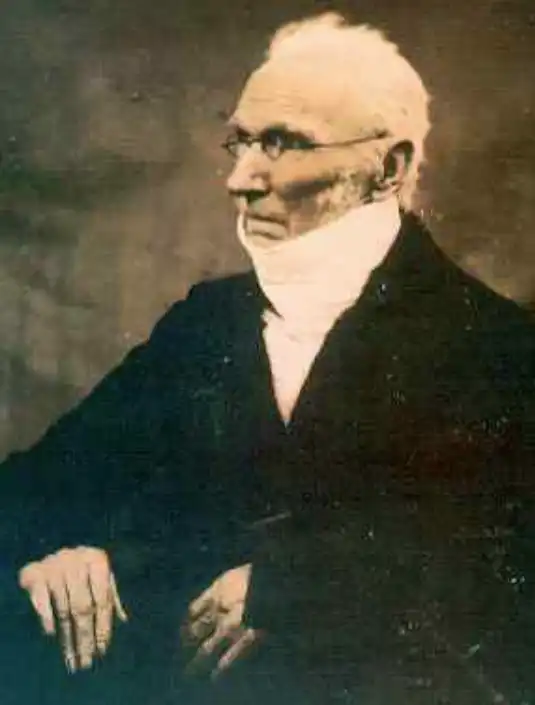
Brontë was closely involved in and supportive of his children’s education. The parsonage was full of books, newspapers, magazines and periodicals. The children read history, poetry and contemporary journalism alongside religious works. Patrick himself continued to publish verse and prose throughout their childhoods.
Charlotte was sent to Roe Head School, one of the more academically serious girls’ schools in Yorkshire, where pupils studied languages, literature and history rather than just the customary skills considered suitable for middle-class girls such as piano playing and needlework. With Emily, she later travelled to Brussels to study literature at a private boarding school - a substantial undertaking for the unmarried daughters of a country curate. Patrick approved the arrangement and paid for their tuition.
In 1846, Charlotte, Emily and Anne published a joint volume, Poems, under the pseudonyms Currer, Ellis and Acton Bell. The following year, Jane Eyre, Wuthering Heights and Agnes Grey all appeared in print. Jane Eyre was Charlotte’s novel, Wuthering Heights Emily’s, and Agnes Grey Anne’s. The novels were issued under the Bell names, and their authorship was not immediately disclosed.

Later, the sisters’ identities became widely known and Charlotte went on to record that her father read her work and spoke of it with immense pride.
Between them, the three sisters wrote seven novels. Jane Eyre and Wuthering Heights have sold millions of copies worldwide and have never been out of print; Anne’s The Tenant of Wildfell Hall is widely regarded as one of the earliest feminist novels in English. Their work remains set on school and university syllabuses internationally.
The novels have generated dozens of film and television adaptations. Recently, Emerald Fennell’s “Wuthering Heights” inspired film, starring Margot Robbie and Jacob Elordi, hit cinemas, and a new television adaptation of Jane Eyre starring Aimee Lou Wood has just been announced.
Emily and Anne did not marry. Charlotte married in 1854, aged 38. Brontë outlived all six of his children, dying in 1861.